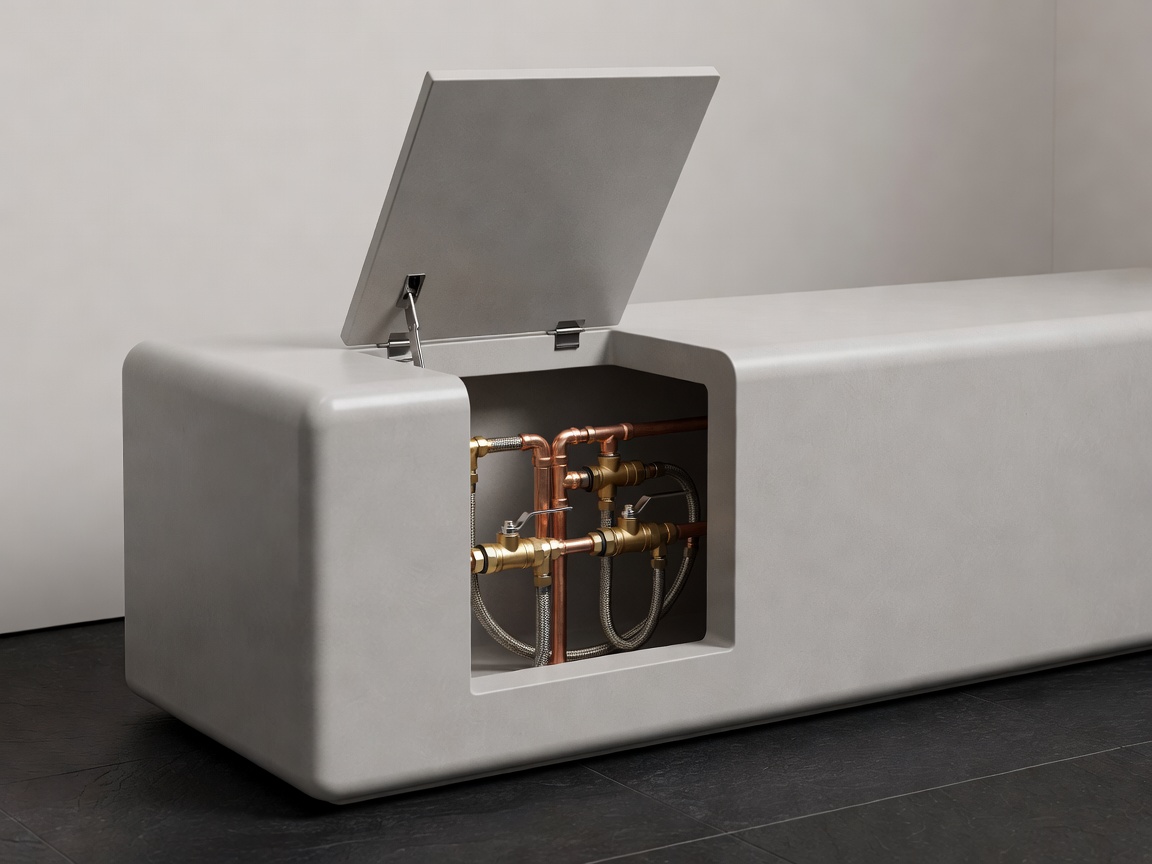
Turn maintenance into a design brief
A residential spa introduces systems that may need attention even when the room is rarely used. Before the layout is fixed, ask every equipment supplier for service clearances, routine tasks, replacement requirements and safe shutdown instructions. Combine that information into one maintenance brief rather than leaving it scattered across brochures. Identify which tasks are suitable for the homeowner and which require trained service personnel. A design that assumes unlimited specialist attendance may not suit a lightly used home. Equally, asking a homeowner to perform technical work is not a sensible way to reduce running costs.
Provide access that genuinely works
Access needs to accommodate hands, tools, working posture and replacement parts. The visible size of a panel is not the same as the usable opening behind it. Check that pipework, cables and fixed joinery do not block removal, and consider how a heavy component will be supported. Isolation valves and electrical isolators need clear identification and appropriate accessibility. Service panels within protected enclosures must retain the required water, vapour or fire performance where relevant. Do not improvise a decorative hatch that compromises the system it passes through. Coordinate the detail with the responsible designer and supplier.
Separate everyday care from technical servicing
Everyday care may include removing surface water, cleaning approved finishes and checking visible drains, subject to the product instructions. Technical work may involve electrical testing, generator descaling, pump servicing or ventilation inspection. The division depends on the actual equipment and its manuals. Avoid publishing a universal frequency that implies all systems are alike. Water hardness, use, temperature and product design can materially change the required attention. Ask for a project-specific schedule with a named responsible person, clear warning signs and a record of work completed, rather than an unqualified instruction to service “regularly”.
Take water hygiene seriously
A spa containing retained, heated or aerosol-generating water requires a water-hygiene strategy appropriate to its equipment and use. This is different from wiping down a shower. Specialist advice may be needed on treatment, testing, circulation, stagnation and safe shutdown. The Health and Safety Executive’s HSG282 addresses control of legionella and other infectious agents in spa-pool systems; HSG274 and the L8 Approved Code of Practice are further reference points in relevant contexts. Their legal application depends on the circumstances. Do not assume that private ownership eliminates biological risks or that a generic chemical dose is safe for every vessel.
If a property is left empty for extended periods, agree an absence and restart procedure with the relevant specialists. Some equipment needs draining, some needs continued protection and some should not be restarted without checks. Manufacturer guidance and the site risk assessment should determine the approach. Never mix cleaning or treatment chemicals, and keep them in suitable labelled storage away from children and incompatible materials. This guide does not provide chemical dosing instructions. Where the water condition, odour or equipment behaviour is abnormal, stop using the affected facility and obtain competent advice.
Make drying observable
The room should have a defined recovery cycle, not merely an instruction to leave the door open. Opening into the house can move moisture into spaces not designed for it. Ask how ventilation and controls will operate after use and how the owner will know that they are functioning. Persistent condensation, swelling joinery, unusual odours or recurring mould should prompt investigation rather than repeated cosmetic treatment. Keep grilles and drainage paths unobstructed. Changes to room use, control settings or household ventilation may alter performance, so record important adjustments and involve the original designer where practical.
Require a usable handover
Request as-built drawings, product identifiers, commissioning results, warranties, manuals and service contacts in an organised record. Include photographs of concealed work where available and a simple plan showing isolation points. The homeowner should receive a practical demonstration rather than a folder alone. That demonstration should cover normal operation, shutdown, fault indications and actions that must not be attempted. Record unresolved defects separately with an agreed route for correction. A functioning system at handover does not remove the need to document how its performance was verified or how future changes should be controlled.
Plan for replacement, not permanence
Finishes and equipment rarely share the same service life. A concealed generator may need replacement while surrounding stone remains perfectly usable. Keep critical components separable where the system permits, retain spare finish material where sensible and record product references. Ask about spare parts and support before buying unusual equipment. Consider the practical cost of access, specialist attendance and reinstatement alongside energy and consumables. The aim is not to predict every failure. It is to make normal care and eventual replacement possible without turning a small technical task into avoidable demolition.